What is a Shaligram Stone? Meaning, Origin, and Sacred Connection to Lord Vishnu
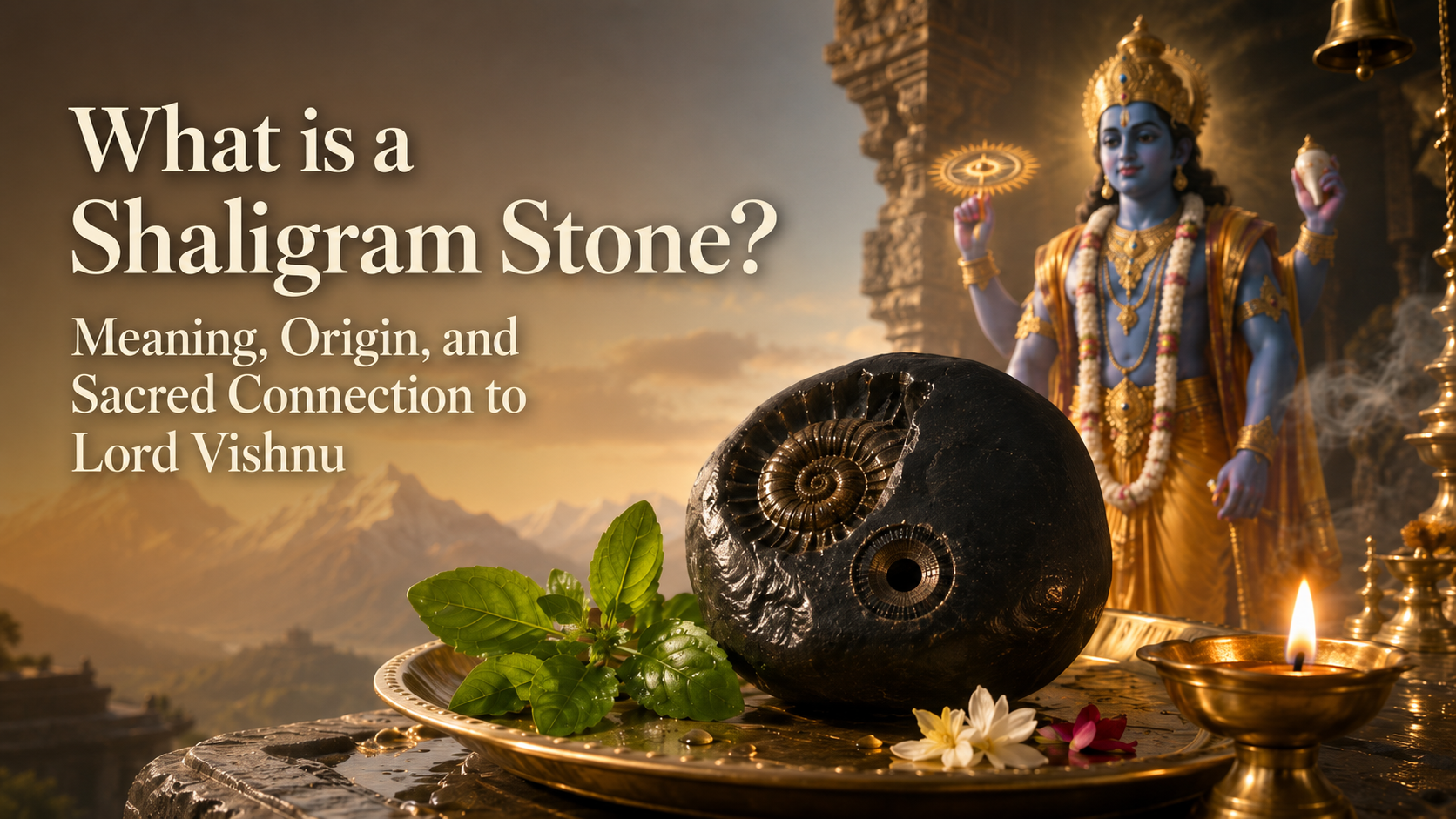
For thousands of years, the Shaligram Shila has been revered as one of the most sacred, powerful, and mysterious icons in Hinduism. Unlike regular idols carved out of metal or wood by human hands, a Shaligram is a naturally occurring stone formed over millions of years. It is worshipped directly as the living, non-anthropomorphic manifestation of Lord Vishnu himself.
In this deep-dive guide, we will unpack the literal meaning of Shaligram, explore the geographical origins of these ancient stones, and uncover the fascinating legends that tie them directly to Lord Vishnu.
The Core Definition: What is a Shaligram Stone?
A Shaligram (also spelled Saligram or Shaligram Shila) is a specific type of dark-colored, spherical, or oval stone containing fossilized ammonite shells. These ancient fossils date back to the Cretaceous-Jurassic period, roughly 140 to 165 million years ago, when the current Himalayan region was the floor of the ancient Tethys Ocean.
[ Ancient Sea Floor (Tethys) ] ➔ [ Fossilized Ammonite Shells ] ➔ [ Himalayan Upliftment ] ➔ [ Natural Polishing by Gandaki River ]
To the naked eye, these stones feature unique geometric spirals, circular markings, and discs carved naturally into the rock. In Hinduism, these sacred spirals are recognized as the Sudarshana Chakra—the divine discus weapon wielded by Lord Vishnu. Because they are naturally shaped, a Shaligram does not require a formal ritual of Prana Pratishtha (infusing life into an idol); the divine energy is already inherently present within the stone.
Where is the Shaligram Stone Found?
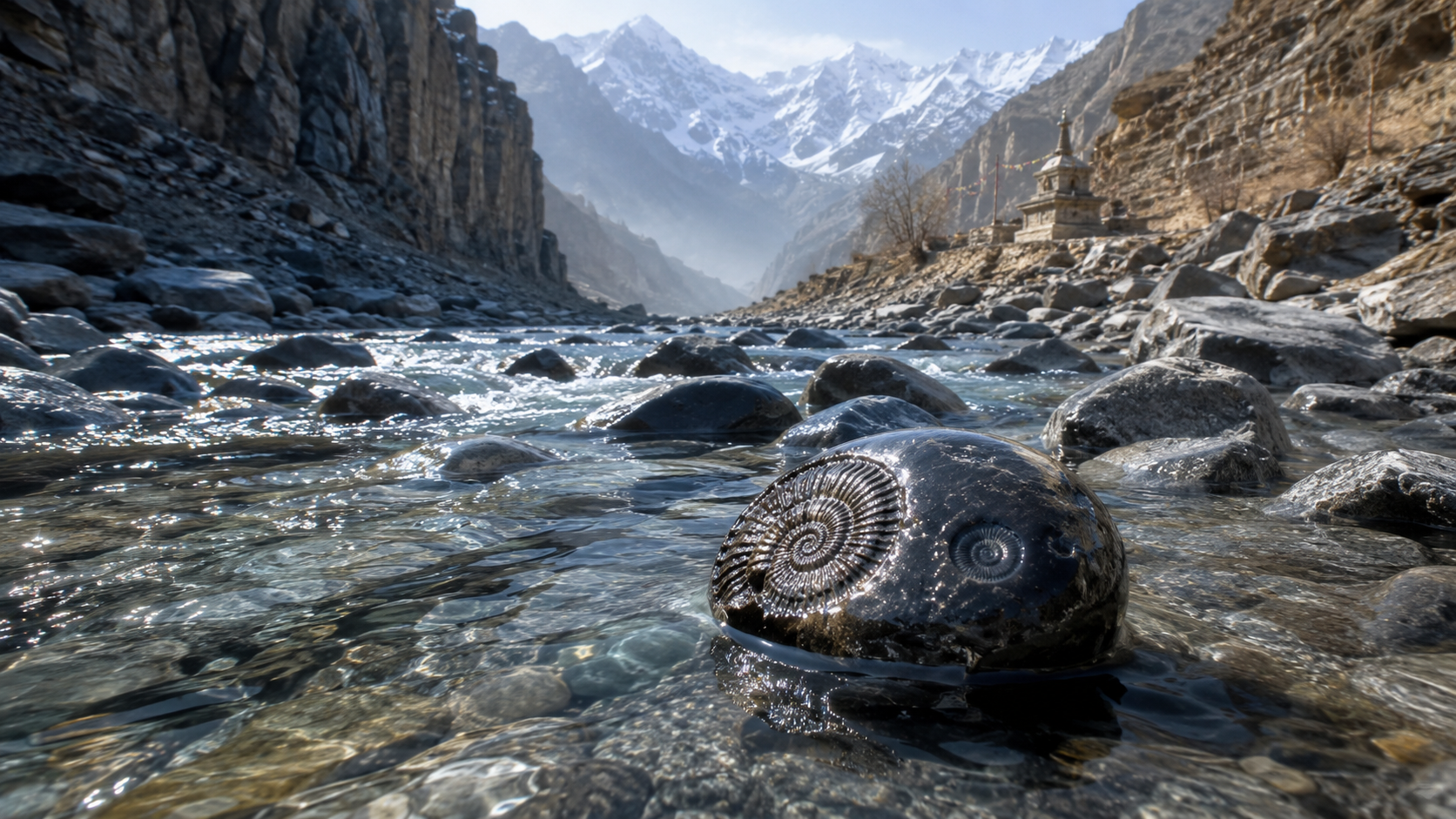
True Shaligram stones are exceptionally rare because they are found in only one specific geographic location on Earth: the riverbed of the Kali Gandaki River in the remote Muktinath Valley of Nepal.
[ Kali Gandaki River Basin ]
│
┌──────────┴──────────┐
▼ ▼
[ Damodar Kunda Source ] [ Muktinath Valley Temple ]
- The Sacred Origin: The river flows between the majestic Dhaulagiri and Annapurna mountain ranges.
- The Natural Carving Process: The unique geology of the Kali Gandaki basin causes rocks to break off and tumble down the rapids. Over centuries, the freezing water naturally polishes the hard shale stones, slowly revealing the hidden, intricate ammonite fossil spirals inside.
- The Pilgrimage Connection: Devotees make arduous journeys to the Muktinath temple area just to find or catch a glimpse of these sacred stones rolling down the riverbed.
The Symbolic Meaning of Shaligram Features
Every single Shaligram is entirely unique. Scholars and priests identify the specific form of Lord Vishnu residing within a stone by analyzing its colors, openings (vadana), and visible spiral markings (chakras):
Shaligram Type | Visual Characteristics | Spiritual Meaning |
Laxmi Narayana Shaligram | Features two prominent, smooth internal chakras. | Brings immense wealth, domestic peace, and prosperity. |
Ugra Narasimha Shaligram | Possesses a wide opening with jagged, tooth-like marks. | Highly powerful; offers fierce protection against negative energies. |
Gopal Shaligram | Perfectly round, smooth shape with a visible wheel marking. | Represents the playful childhood form of Krishna; ideal for families. |
Why is Shaligram Related to Lord Vishnu? The Legend of Tulsi and Jalandhara
The profound mythological connection between the Shaligram stone and Lord Vishnu is beautifully detailed in the Devi Bhagavata Purana and the Padma Purana.
The Story of Demon King Jalandhara and Vrinda
According to Hindu lore, there was a powerful demon king named Jalandhara who could not be defeated by even the gods. His source of absolute invincibility was the flawless purity, chastity, and devotion of his righteous wife, Vrinda. As long as Vrinda remained fiercely faithful to her husband, no weapon in the universe could kill Jalandhara, allowing his tyrannical rule over the three worlds to go unchecked.
The Divine Intervention
To save the universe from destruction, the gods pleaded with Lord Vishnu to intervene. Using his divine illusory powers, Lord Vishnu assumed the exact physical form of Jalandhara and approached Vrinda. Tricked into believing her husband had returned safely from war, Vrinda greeted him.
The moment she touched the disguised Vishnu, her strict shield of chastity broken for a brief second. Seizing this exact window of vulnerability on the battlefield, Lord Shiva was finally able to slay the demon Jalandhara.
The Curse and Transformation
When Vrinda realized she had been deceived, she was heartbroken and filled with immense grief. In her anger, she cursed Lord Vishnu to lose his human consciousness and turn into a cold, black, unyielding stone.
Accepting her curse with grace, Vishnu transformed into the Shaligram Shila. Deeply moved by her devotion, Vishnu also granted her a blessing: Vrinda would transform into the sacred Tulsi plant. He decreed that he would eternally reside as a stone at the roots of the Tulsi plant, and his worship as a Shaligram would remain forever incomplete without an offering of her leaves.
Core Rules for Keeping a Shaligram at Home
Worshipping a Shaligram brings great spiritual and material abundance, but it requires strict adherence to daily disciplines:
- Daily Rituals: A Shaligram must never be left neglected. It requires a daily bath (Abhishek), an offering of fresh Tulsi leaves, and a lit ghee lamp.
- Strict Purity: The household hosting a Shaligram must maintain a clean environment. Pure vegetarian meals (Sattvic food) are mandatory, and untruthful behavior should be consciously avoided.
- No Plastic or Artificial Decor: Place the Shila naturally on a clean copper, brass, or silver plate lined with a fresh silk or cotton cloth.
Summary: The Eternal Bond
The Shaligram is not a mere stone; it is a physical anchor connecting humanity to the preservation energy of the universe. Whether observed on the holy day of Nirjala Ekadashi or through simple daily prayers, worshipping the Shaligram alongside Tulsi leaves honors an ancient promise of love, devotion, and divine protection.