Buddha Sangha | Full Moon Naadbrahma: Tune In. Drop In. Wake Up.
Full moon naadbrahma and what really happens when you sit
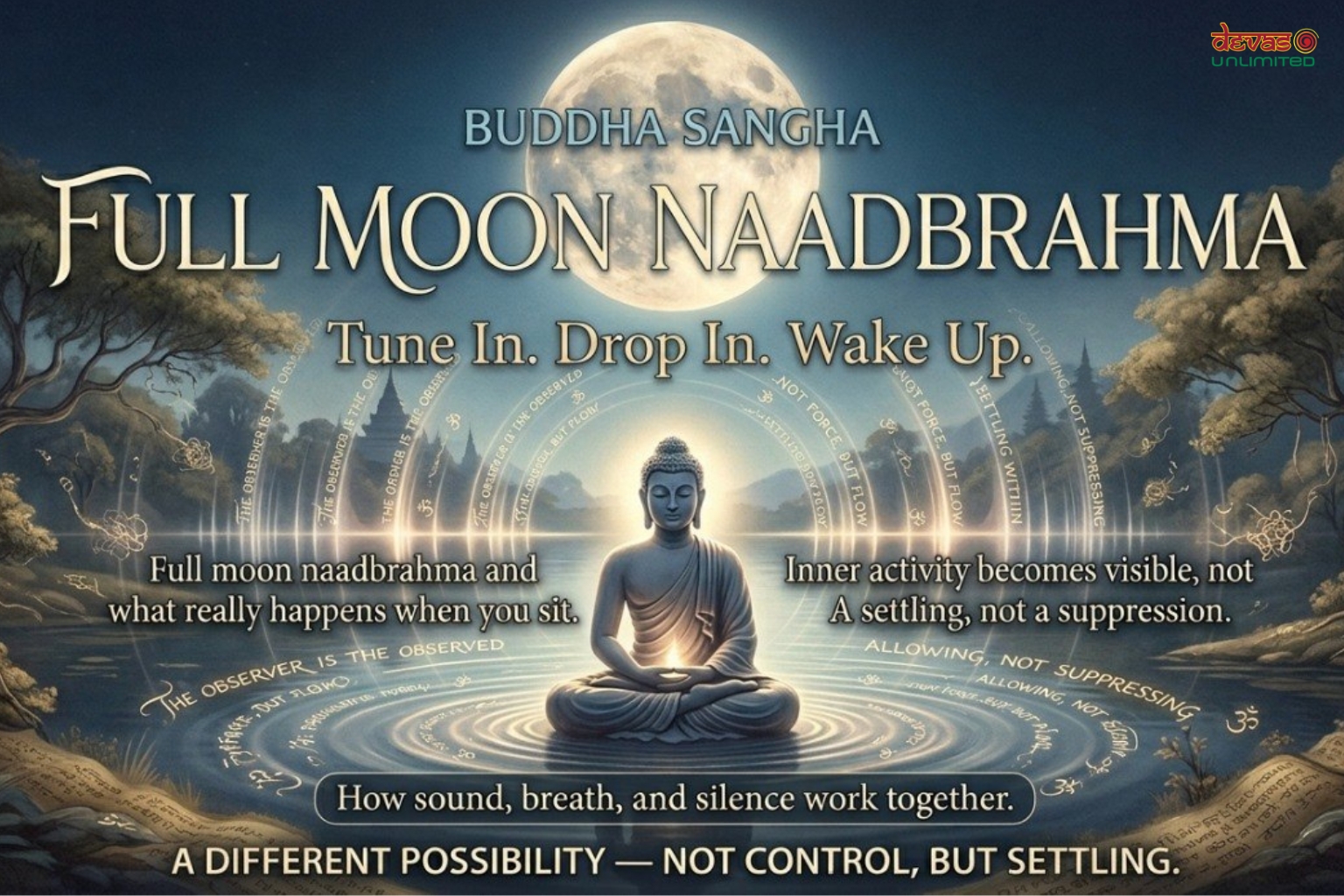
Full moon naadbrahma begins with something very simple.
You sit. And instead of silence, everything starts to come up. Thoughts you didn’t notice during the day begin to move. Conversations replay. Small reactions feel bigger.Even though nothing is happening outside, something inside continues.
This is where most people assume something is wrong. That they are unable to calm their mind, or that they are “not doing it correctly.”
But this is not a failure of meditation. It is the first honest glimpse into how the system actually functions.
Why the mind feels louder when everything is quiet
When you are active, the mind remains occupied.
Work, conversations, decisions – these keep attention moving outward.Because of this, the inner movement is not as noticeable. But the moment external activity reduces, the internal activity becomes visible. It was always there. It just wasn’t seen clearly. Trying to silence this directly often creates more disturbance. Because effort itself becomes another layer of activity.
What continues beneath awareness
Over time, the system collects more than we realize. Not just memories, but:
- incomplete reactions
- emotional residues
- repeated ways of responding
- impressions that were never fully settled
These do not disappear on their own. They remain active beneath awareness and continue to move, especially when there is space.This is why simply “trying to relax” does not always work.Because what is active within is not addressed by effort alone.
A different possibility - not control, but settling
There is another way to approach this. Not by controlling the mind. Not by forcing silence. Not by trying to stop thoughts. But by allowing the system to settle. When there is less interference:
- thoughts begin to slow down
- the intensity of reactions reduces
- attention becomes more stable
Nothing is being suppressed.It is simply not being continuously disturbed. In Devas understanding, this is not about creating stillness. It is about allowing what is already there to become accessible.
How sound, breath, and silence work together
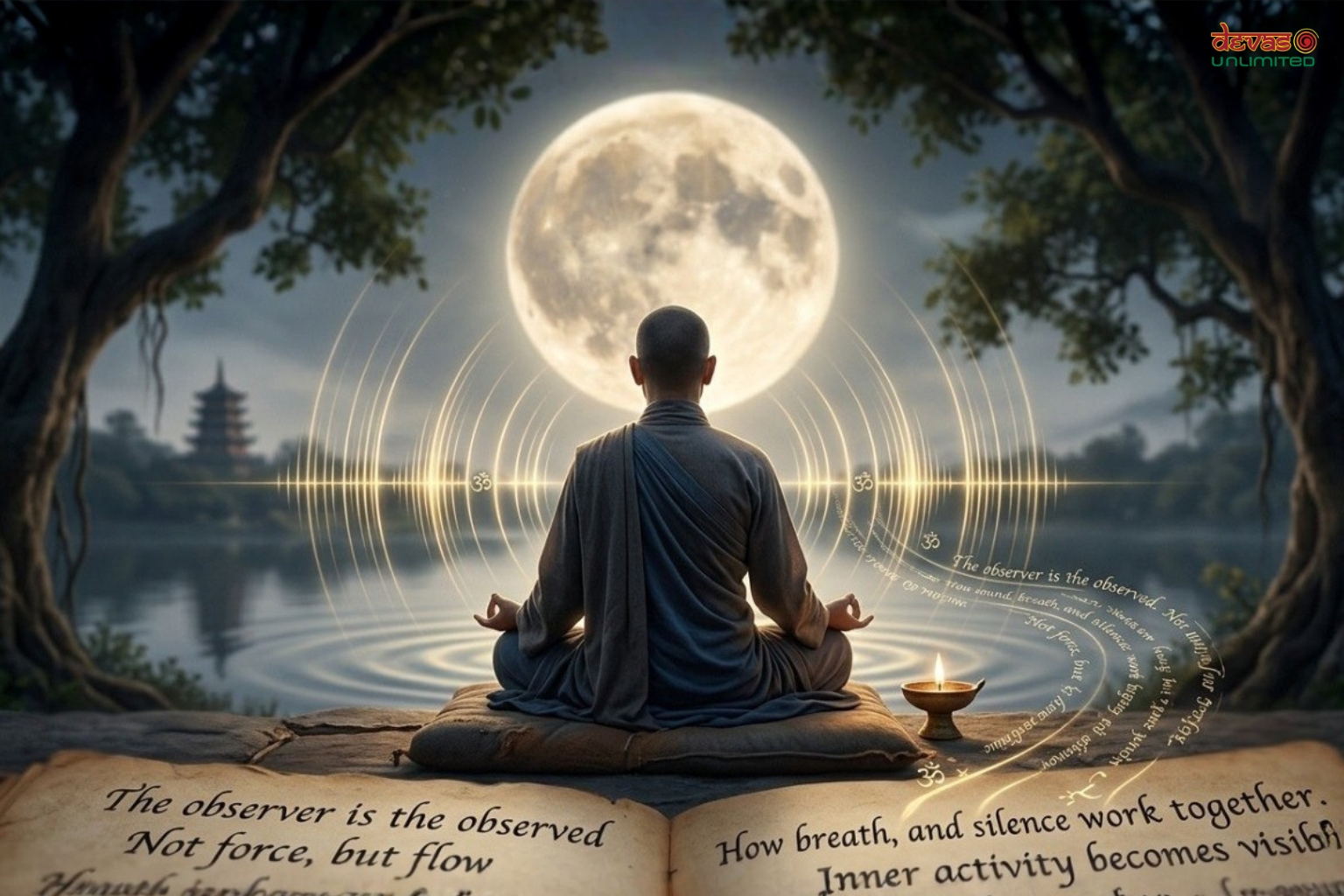
In full moon naadbrahma, sound is not used as a ritual or repetition for its own sake. It acts as a stabilizing support Subtle sound and breath create a rhythm. That rhythm allows the system to move from scattered activity toward a more settled state. From there, silence is not something you try to enter. It is something that begins to appear.
This shift is important. Because it moves the process from doing… to allowing.
Why the full moon becomes relevant
The full moon is often a time when inner activity becomes more visible. Not because something new is created, but because what is already present becomes easier to notice. Thoughts feel stronger. Emotions feel closer to the surface. Instead of resisting this, it can be used.
A moment where:
- observation becomes clearer
- settling happens more naturally
- awareness deepens without effort
This makes the process more accessible.
Seeing differently changes everything
Most approaches focus on changing the experience.
Trying to:
- become calm
- feel better
- respond differently
But there is a limit to how much change can come from effort. Because the response often begins before control is applied.
What changes more deeply is when you begin to see:
- how reactions form
- how thoughts continue without pause
- how the system moves on its own
This seeing creates space. And in that space, the movement begins to reduce.
About the Session
✨ Buddha Sangha | Full Moon Naadbrahma
A guided online session where sound, breath, and silence are used as a direct inner process to allow the system to settle naturally.
🗓️ 1st May 2026
⏰ 6:00 PM – 6:45 PM IST
🌐 Online
👉 Sit. Listen. Let it settle
Key Takeaways
- Inner activity does not start when you notice it
- Silence cannot be created through force
- What feels like disturbance is often just visibility
- Settling happens when interference reduces
- Awareness deepens when observation becomes clear