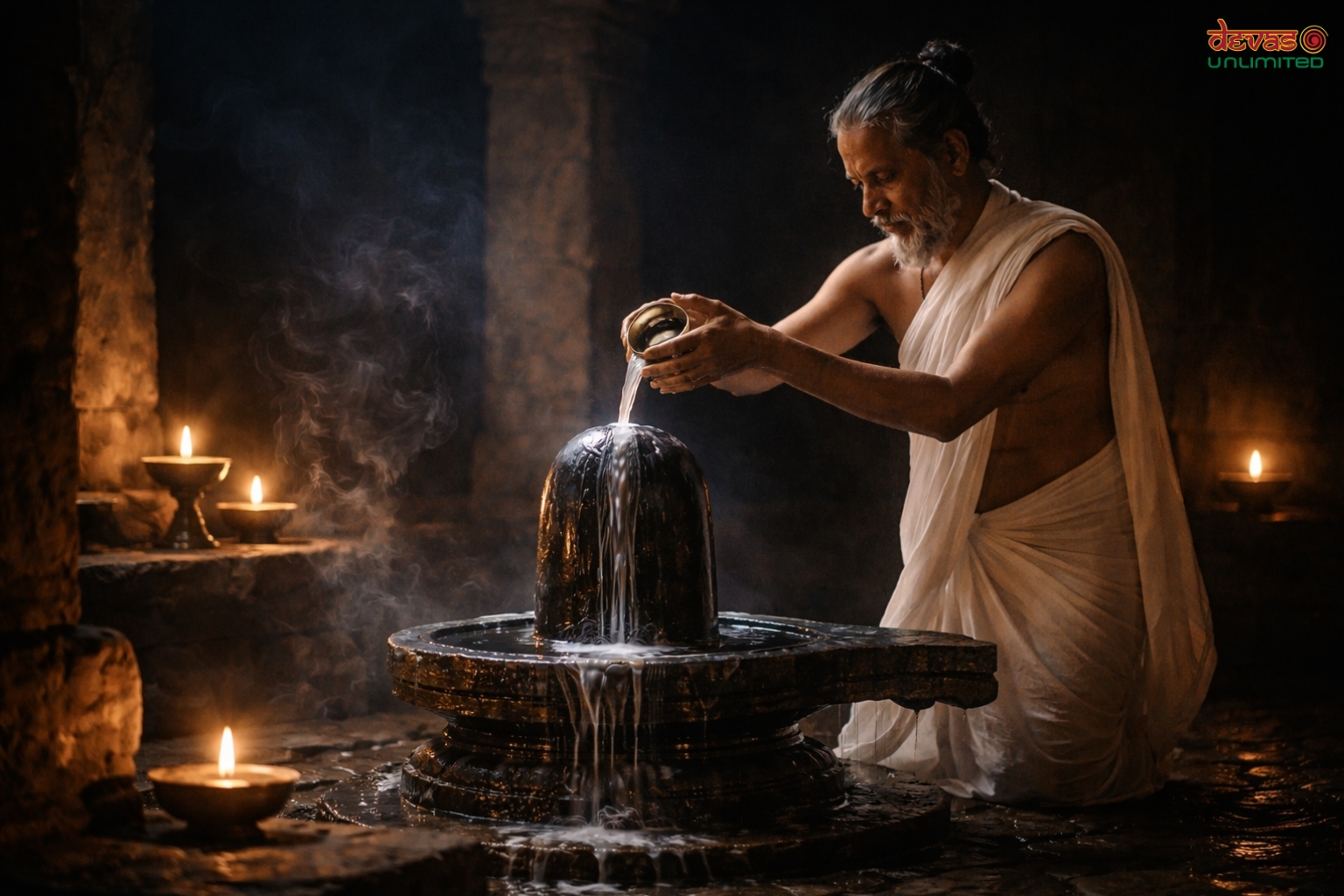
The Importance of Doing Abhishekam on Shivratri: The Inner Science of Offering and Awakening
Shivratri is not just a night of fasting or chanting. It is a shift in the inner atmosphere.
On this night, the pull of the external world weakens, and awareness turns inward more easily. Shiva is not approached as a distant figure, but as stillness itself – accessible, immediate, and present.
In this context, Abhishekam is not a ritual to complete. It is a method of inner awakening.
Shiva Is a State of Consciousness
Shiva does not seek worship. He represents the unmoving center of existence – that which remains unchanged while thoughts, emotions, and circumstances move around it.
The Shivling is not an idol in the ordinary sense. It is a geometric focal point that allows the mind to rest without distraction. It simplifies the infinite into something the nervous system can approach without strain.
Abhishekam is not about bathing Shiva. It is about calming the system of the one who offers.
What Abhishekam Does to the Inner System
Abhishekam works through repetition, rhythm, and sensory grounding. Its effects are psychological and energetic – not merely symbolic.
1. It Reduces Inner Agitation
Most mental disturbance is the result of excess internal pressure:
- Restless thinking
- Emotional reactivity
- Accumulated stress
Cooling substances such as water, milk, honey, or sandalwood are traditionally used for a reason. As the liquid flows steadily over the Shivling, the body mirrors the action.
Breath slows. Muscles soften. Urgency decreases.
The ritual quietly retrains the nervous system to move from intensity to steadiness.
2. It Trains Continuity of Attention
Abhishekam is not a dramatic act. It is a continuous one.
The steady flow matters. It conditions the mind to remain with a single action without rushing toward completion. Over time, this strengthens focus and reduces impulsive reactivity.
Shivratri amplifies this effect because the environment itself supports stillness. What normally takes effort becomes more accessible.
3. It Weakens the Sense of Doership
With sustained awareness, a shift occurs.
The action continues, but the inner commentary reduces. The need to perform, impress, or achieve fades. For brief moments, there is just movement without mental noise.
This is why Rudra Abhishekam is emphasized on Shivratri. The night supports dissolution – not destruction, but softening of rigid identity.
Why Shivratri Deepens the Practice
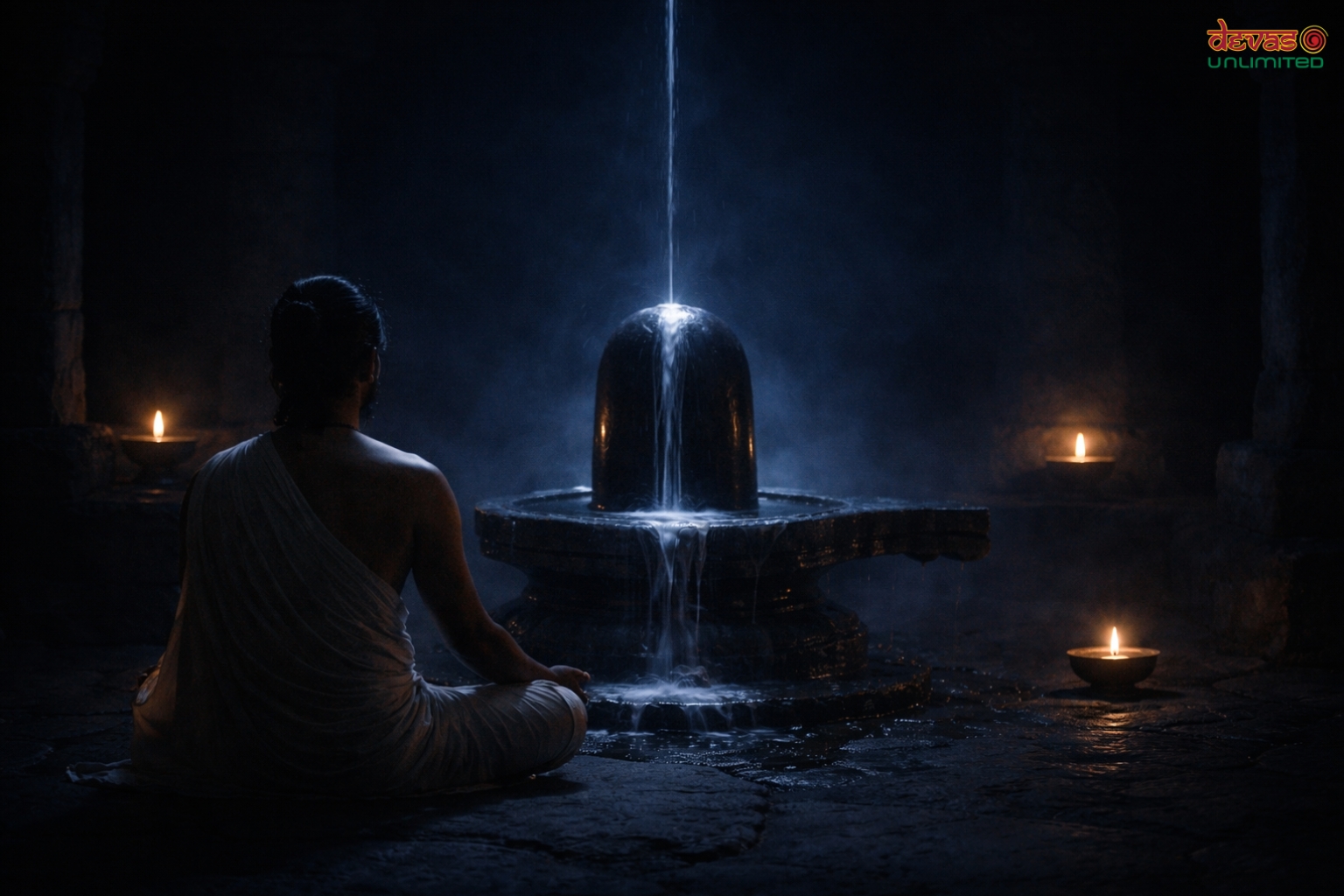
Shivratri carries a natural quietness. Traditional practices – night vigil, minimal food, repetitive chanting are not arbitrary. They reduce sensory overload and internal distraction.
Doing Abhishekam on this night is effective because resistance is already lower. Even a simple offering can penetrate more deeply.
Moving From Request to Awakening
Many perform Abhishekam for relief, protection, or blessings. There is nothing wrong with this.
But its deeper value lies elsewhere.
Shiva does not reorganize life to satisfy preference. The practice reorganizes perception. When perception steadies, life feels lighter – even if circumstances remain unchanged.
That is awakening.
How to Perform Abhishekam on Shivratri
Elaborate materials are unnecessary. What matters is steadiness.
Before beginning, pause. Let the breath settle.
As you pour:
- Keep the flow slow and continuous
- Remain aware of your breath
- Release tension in the body
Afterward, sit quietly for a few minutes. Do not immediately ask for outcomes. Allow the nervous system to absorb the stillness.
What Changes Over Time
The effects are subtle but consistent:
- Reduced mental noise
- Greater emotional stability
- Less urgency in decision-making
- Increased tolerance for uncertainty
These are signs that the practice is working.
Abhishekam on Shivratri is not about ritual perfection. It is about creating conditions where awakening becomes possible.
Shiva is not far away. He is recognized when agitation settles.
And Shivratri makes that recognition easier. 🕉️
FAQs:
- Why is Abhishekam important on Shivratri?
Abhishekam on Shivratri works deeply because the night supports stillness, helping calm the mind, dissolve ego patterns, and align with Shiva consciousness. - What is the spiritual meaning of Abhishekam?
Spiritually, Abhishekam is not about bathing Shiva but softening the devotee, cultivating surrender, presence, and inner alignment through continuous offering. - Which substances are best for Abhishekam on Shivratri?
Water, milk, honey, and sandalwood are ideal as they cool inner agitation, reduce emotional heat, and support mental and energetic balance. - Can Abhishekam be done at home on Shivratri?
Yes, Abhishekam can be done at home. Sincerity, awareness, and a calm pace matter more than elaborate materials or complex rituals. - What should one do after Abhishekam?
After Abhishekam, sit quietly in silence without asking for anything, allowing stillness to settle and complete the inner effects of the ritual.